Delivery Riders and Condo Security: A Practical Policy for Managing Agents
5
October
2026
MERCHANT
Promote your best aircon services on our platform where residents can avail through myCondo.
RESIDENT
Experience better condominium living and facilitate transactions for all your condo-related needs, including buying and selling products and services.
CONDO MANAGEMENT
Condo Managers get intuitive online-based system with exciting new features in administering units.

SHARE
How should a condo manage delivery riders without compromising security? Decide where riders are allowed to go, make residents pre-register or approve deliveries, log every delivery entry, and give riders a fast path that does not require entering residential blocks when possible. With a clear policy and the right tools, guards spend less time on deliveries and residents get their food and parcels faster.
Food delivery, grocery delivery and e-commerce parcels have changed the daily rhythm of Singapore condominiums. In many estates, delivery riders now outnumber social visitors on weekday evenings. Each rider is a stranger who needs to reach a specific unit within minutes, which puts pressure on both guards and security rules.
Delivery riders are different from other visitors:
Treating riders like social visitors creates queues. Letting them through without checks creates a security gap. A delivery policy finds the middle ground.
There are four common models in Singapore condos. Many estates combine two or more.
Delivery access models compared
| Model | How it works | Security | Resident convenience |
|---|---|---|---|
| Guardhouse handover | Rider leaves the item at the guardhouse; resident collects | High | Low; resident must come down |
| Lobby or drop-off point | Rider goes only to the block lobby; resident meets them | High | Medium |
| Parcel lockers | Rider places parcels in a locker; resident gets a code | High | High for parcels, not suitable for hot food |
| Door-to-door with approval | Rider goes to the unit after the resident approves | Medium, depends on controls | High |
For most estates, a practical default is: parcels to lockers or the guardhouse, food to the lobby, and door-to-door only with resident approval and a time-limited pass.
The resident is the only person who knows a delivery is genuine. Your policy should make that clear:
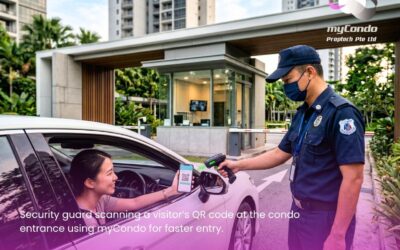
In the myCondo app, residents can register a delivery in a few taps and receive a notification when the rider arrives. They can approve entry or ask the guard to hold the item.
If your estate allows door-to-door delivery, the rider should get a pass that:
Smart door stations make this possible. An Akuvox X915S door station, for example, accepts QR codes, PIN, Bluetooth and RFID credentials as well as face recognition, and myCondo can issue a QR code that works only at the right doors for the right time. The X915S is rated IP66 and IK10, which suits busy lobby entrances.
Riders in a hurry may hold doors open for each other or follow residents through gates. Your policy should cover:
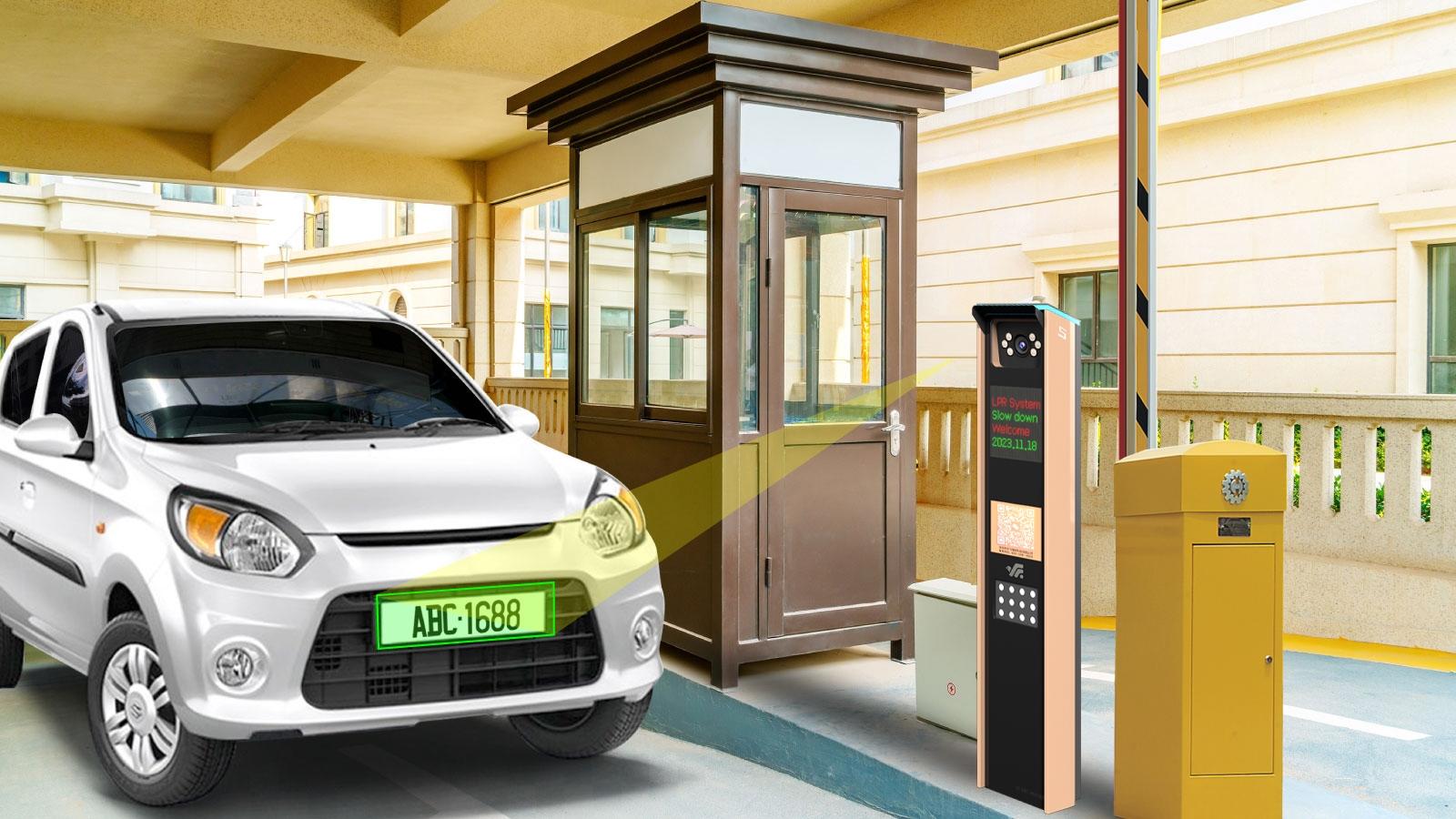
Many riders arrive on motorcycles, and some parcel services use vans. Decide where they can stop. Common choices are a designated short-stay bay near the guardhouse or a drop-off point that keeps vehicles out of resident car parks.
If vehicles are allowed in, licence plate recognition helps. Cameras from partners such as Dahua Technology and Hikvision read plates at the barrier and log entry and exit times. Hikvision’s DeepinView ANPR cameras, for example, can also detect vehicles without plates and recognise motorcycle plates in checkpoint scenarios, which helps when riders arrive on two wheels. With myCondo, a delivery vehicle can be given a short-stay permission that expires automatically.
You do not need detailed personal data from every rider. A good delivery record includes:
Under PDPC guidelines, guards should not record full NRIC numbers for routine deliveries. If a rider’s identity needs checking, a visual check of photo ID is enough. Keep records in a system with access controls and delete them after your retention period.
Put the policy into a short notice for residents and a one-page instruction for guards. Residents should know:
Guards should know how to handle unannounced riders, what to record, and when to call the managing agent.
Delivery policy at a glance
| Item | Example rule |
|---|---|
| Parcels | Delivered to parcel lockers or the guardhouse; resident notified |
| Food | Delivered to the block lobby; door-to-door only with resident approval |
| Rider pass | QR pass valid for 20 minutes, gate and one lobby only |
| Vehicles | Short-stay bay near the guardhouse; plate logged by LPR |
| Records | Platform, unit, times and vehicle number; no full NRIC |
| Unclaimed items | Held at the guardhouse for a set period, then returned to sender |
myCondo lets residents register and approve deliveries in the app, gives guards a live list of expected riders, issues short QR passes that open only the right doors, and logs every entry for the managing agent. It integrates with door stations, barriers, LPR cameras and CCTV from partners such as Dahua Technology, Hikvision, Akuvox and Milestone, and our Singapore team provides setup and after-sales support.
Many estates restrict riders to the lobby or guardhouse through their by-laws or house rules. Check your estate’s by-laws and communicate the rule clearly to residents.
Generally no. Under PDPC guidelines, a visual check of photo ID and a record of the platform, unit and time is usually enough.
With digital records, the managing agent can see when the rider entered, which doors they used and when they left, then review CCTV for that exact time.
Standard lockers are designed for parcels. For food, a lobby handover or a short door-to-door pass is more practical.
Combine signage, door-held-open alerts, CCTV at lobby doors and short passes, so riders have no reason to follow others in.
Our team can review your current delivery process and equipment and recommend practical changes, with no obligation.
WhatsApp or call: +65 8812 3888
Email: [email protected]
Address: 8 Ubi Road 2, #07-13 Zervex, Singapore 408538
Related reading: QR Code Visitor Passes in Condos: How They Work and Are They Safe?
YOU MIGHT ALSO LIKE
What is tailgating at a condo, and how do you stop it? Tailgating is when someone without access follows an authorised person through a gate, door or car park barrier before it closes. It is the most common way strangers get into Singapore condos. You stop it with a...
How do you manage contractor and renovation access in a condo without losing track? Tie every contractor to a unit, an approved permit and a fixed date and time window, give them a pass that expires automatically, and log every entry and exit digitally. This guide...
Should your condo replace its paper visitor logbook with a digital visitor management system? For most Singapore estates, yes. A digital system verifies visitors through the resident, records entry and exit automatically, keeps personal data under control for the...
NEVER MISS OUR ARTICLES
Get our stories delivered from us to you.