Access Card vs Mobile Credential vs Face Recognition: Choosing Condo Access Control
7
October
2026
MERCHANT
Promote your best aircon services on our platform where residents can avail through myCondo.
RESIDENT
Experience better condominium living and facilitate transactions for all your condo-related needs, including buying and selling products and services.
CONDO MANAGEMENT
Condo Managers get intuitive online-based system with exciting new features in administering units.

SHARE
Which is best for condo access control: access cards, mobile credentials or face recognition? There is no single winner. Cards are familiar and cheap but easily lent or lost. Mobile credentials are convenient and easy to manage remotely but depend on phones. Face recognition is fast and cannot be lent, but needs careful handling under the PDPA. Most Singapore condos get the best result by combining them: face or mobile for residents, QR passes for visitors, and cards as a fallback.
Access control is one of the biggest decisions in a condo security upgrade. It affects every resident, every day. This guide compares the three main options so MCST councils and managing agents can choose with confidence.
Access card vs mobile credential vs face recognition
| Factor | Access card | Mobile credential | Face recognition |
|---|---|---|---|
| Speed at the door | Fast | Fast (Bluetooth) to medium (open app) | Fastest, hands-free |
| Can be lent or shared | Yes, easily | Harder, tied to a phone and account | No |
| Lost or forgotten | Common; replacement cost | Phone needed; revoke remotely | Not applicable |
| Cloning risk | Higher for older card types | Lower with encrypted credentials | Low with anti-spoofing |
| Remote issue and revoke | No, physical handover | Yes | Yes, after enrolment |
| Works for visitors | Not practical | Yes, via QR or temporary pass | Not usually for one-off guests |
| Privacy considerations | Low | Medium | Higher; biometric data under the PDPA |
| Upfront cost | Low if readers exist | Low to medium | Medium to high (terminals) |
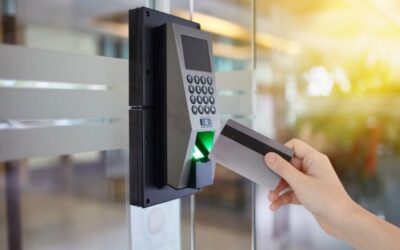
Most Singapore condos already use access cards, usually RFID cards at 125 kHz or 13.56 MHz. They are simple and residents understand them. The problems are well known:
Cards still have a place as a backup credential, particularly for residents who prefer not to use a phone or face enrolment.
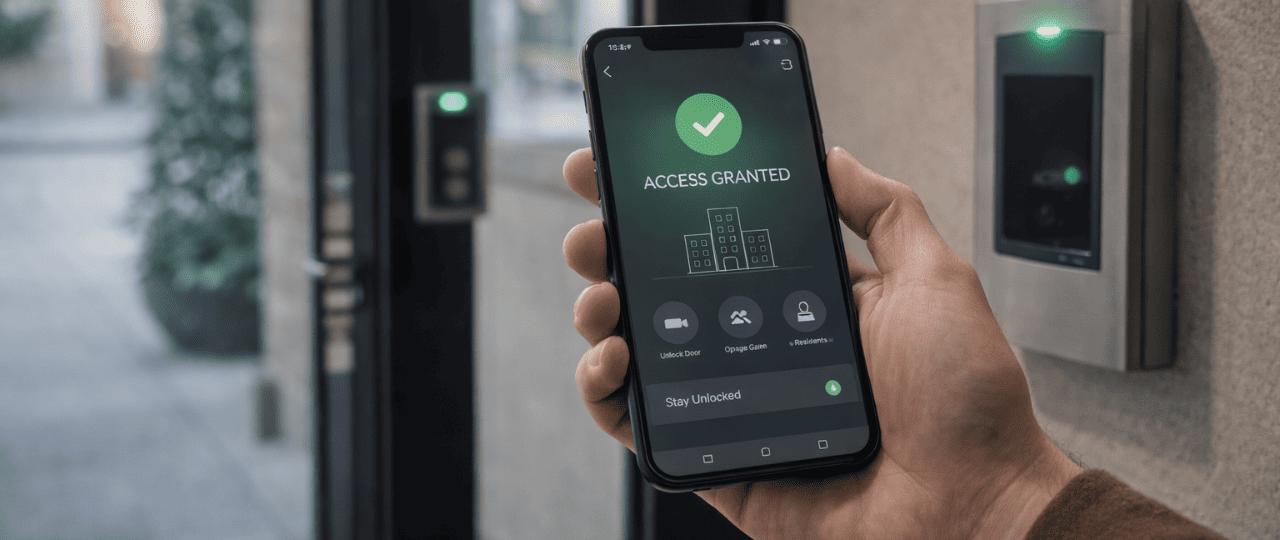
Mobile credentials turn the resident’s phone into the key, using Bluetooth, NFC or a QR code in the condo app. Their biggest advantage is management: the managing agent can issue and revoke access instantly, without handing over anything physical.
The limits: phones run out of battery, and some residents, especially older ones, may not be comfortable with apps. That is why a fallback is important.
Face recognition terminals compare the person at the door with enrolled faces. Modern devices include anti-spoofing to reject photos and videos. For residents, it is the most convenient option: no card, no phone, just walk up.
Face recognition also solves card-sharing, because a face cannot be lent. That makes access logs far more reliable.
Facial images used for recognition are personal data, and biometric data deserves extra care. The PDPC has published guidance on the responsible use of biometric data in security applications. In practice, MCSTs should:
Modern door stations do not force you to choose one method. The Akuvox X915S, for example, supports face recognition with anti-spoofing using a secondary 2MP camera, QR codes, PIN, Bluetooth, and RFID cards at 125 kHz and 13.56 MHz, including MIFARE DESFire. It stores up to 20,000 faces, 20,000 PINs and 100,000 cards, has an 8-inch touchscreen, and is rated IP66 and IK10. Hikvision also offers face recognition terminals widely used for building access.
For vehicles, licence plate recognition plays the same role as a credential. LPR cameras from Dahua Technology and Hikvision read resident and visitor plates and open the barrier automatically.
Who uses what
| User | Primary credential | Fallback |
|---|---|---|
| Residents | Face recognition or mobile credential | Encrypted access card |
| Residents’ vehicles | Licence plate recognition | Card or guard verification |
| Visitors | QR pass from the resident’s invite | Guard registration and resident approval |
| Helpers and tutors | Recurring QR pass or enrolled face with an end date | Guard verification |
| Contractors | Time-limited QR pass tied to a permit | Guard verification |
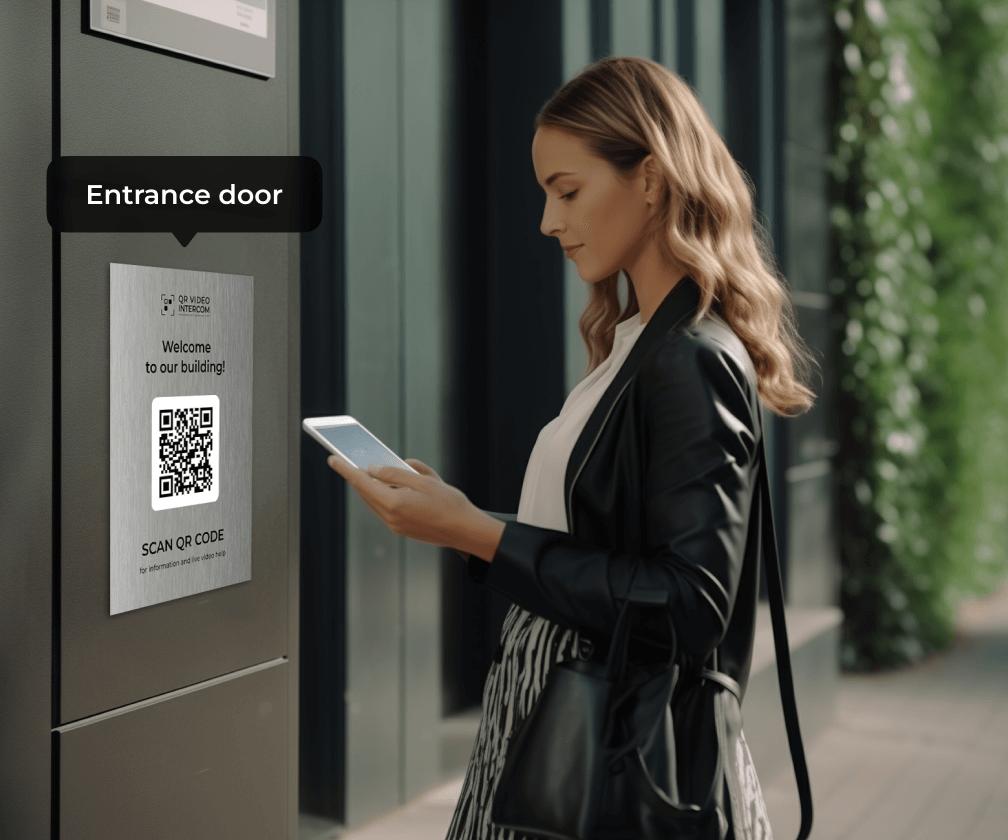
myCondo connects resident and visitor management with your access control hardware. Residents manage visitors and mobile access in one app, managing agents issue and revoke credentials from a web app, and guards see every entry in real time. We integrate with door stations, LPR cameras, barriers and CCTV from partners including Akuvox, Hikvision, Dahua Technology and Milestone, and our Singapore team handles setup, enrolment support and after-sales service.
It can be used, but biometric data must be handled carefully under the PDPA. Get consent, explain the purpose, protect the data and offer an alternative.
Often, yes, as a fallback. If your cards are an older, easily copied type, plan to replace them with encrypted cards over time.
They can use face recognition, a card or the guard. This is why every estate should keep at least one fallback.
Performance varies by device. Test with residents during a pilot before full rollout.
Visitors use QR passes from the resident’s invite, or register with the guard and get the resident’s approval.
Our team can survey your entrances and recommend the right mix of card, mobile and face access for your residents, with no obligation.
WhatsApp or call: +65 8812 3888
Email: [email protected]
Address: 8 Ubi Road 2, #07-13 Zervex, Singapore 408538
Related reading: QR Code Visitor Passes in Condos and How to Write a Condo Security Upgrade Proposal
YOU MIGHT ALSO LIKE
How do you register a visitor at your condo using an app? Open your condo's app, choose to invite a visitor, enter their name, visit date and time (and car plate if they are driving), then share the pass with your guest. When they arrive, they scan the QR code or...
How should a condo prepare its guardhouse for festive season visitors? Start two weeks ahead: remind residents to pre-register guests and car plates, plan visitor parking and overflow, add guard coverage for peak hours, check every gate, barrier and camera, and agree...
How can you prevent parcel theft in a Singapore condo? Stop parcels from sitting unattended. Use parcel lockers or guardhouse holding, register expected deliveries, control who can reach unit doors, and make sure lobby and corridor areas are covered by CCTV linked to...
NEVER MISS OUR ARTICLES
Get our stories delivered from us to you.