Visitor Management for Security Agencies: Winning MCST Tenders with Technology
9
October
2026
MERCHANT
Promote your best aircon services on our platform where residents can avail through myCondo.
RESIDENT
Experience better condominium living and facilitate transactions for all your condo-related needs, including buying and selling products and services.
CONDO MANAGEMENT
Condo Managers get intuitive online-based system with exciting new features in administering units.

SHARE
How can a security agency win more condo tenders in Singapore? Councils are no longer choosing on headcount and hourly rate alone. MCSTs want proof that guards will be supported by technology: digital visitor registration, licence plate recognition, audit trails they can read, and a clear plan for what happens when the system goes down. Agencies that bring a working visitor management system (VMS) into the bid, with a named integration partner, give the council something to compare beyond price.
This guide is for security agency owners, operations managers and bid writers who tender for condominium and mixed-development contracts. It explains what MCST councils and managing agents look for, how to present technology in a bid without overpromising, and how myCondo works with agencies so the guard team and the system arrive as one package.
Three pressures have changed how councils evaluate security bids.
Manpower is tight and expensive. The Progressive Wage Model for security officers has raised wages in scheduled steps, and the industry has been encouraged for years to adopt “outcome-based contracting” where buyers specify the security outcome rather than a fixed number of guards. A council that pays more per guard each year naturally asks whether technology can let the same guard cover more.
Residents expect app-based convenience. Residents who pre-register visitors on a phone at the office do not want their guests waiting at a guardhouse while a guard copies details into a logbook. Complaints about guardhouse queues and lost logbooks land on the council’s desk, and the council passes them to the agency.
Data protection is a council liability. Since the PDPC’s NRIC advisory guidelines took effect on 1 September 2019, condos should not be collecting full NRIC numbers from ordinary visitors. Councils want a process that collects only what is needed, keeps it secure and deletes it on a schedule. A paper logbook on the guardhouse counter fails all three.
Every council writes its own tender documents, but the evaluation usually covers the same ground. The table below sets out the criteria we see most often and how a VMS-backed bid answers each one.
Common MCST tender criteria and how technology supports them
| What the council scores | What a manpower-only bid offers | What a technology-backed bid offers |
|---|---|---|
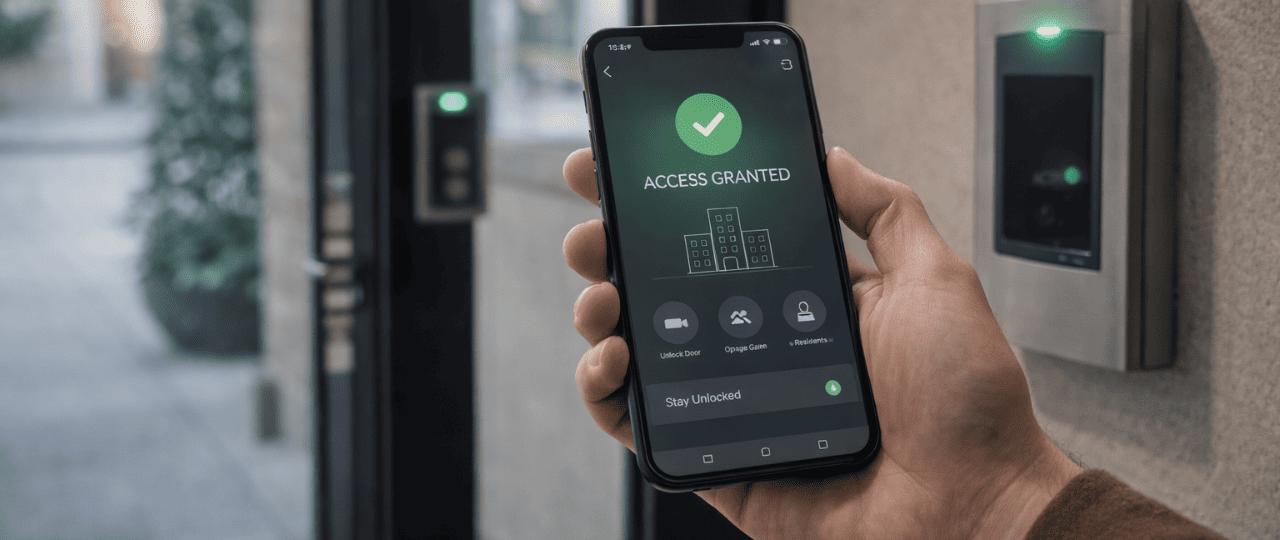
| Visitor control | Logbook, guard phones the unit | Resident pre-registration, QR pass, digital log with timestamps |
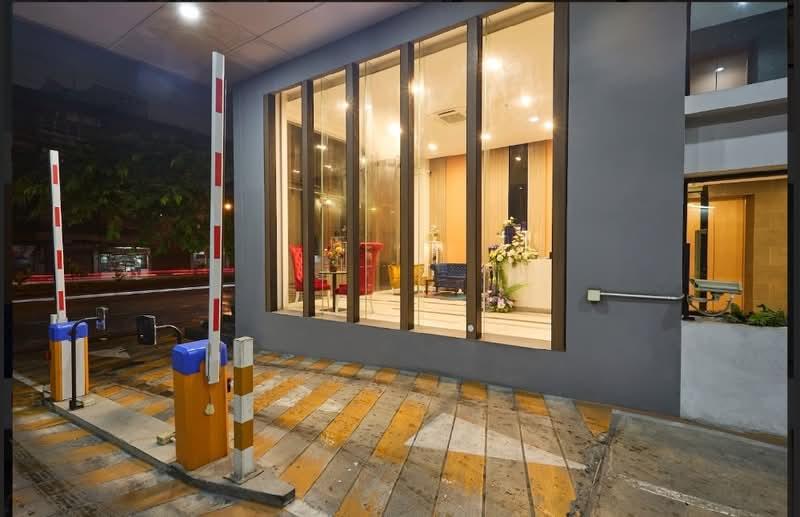
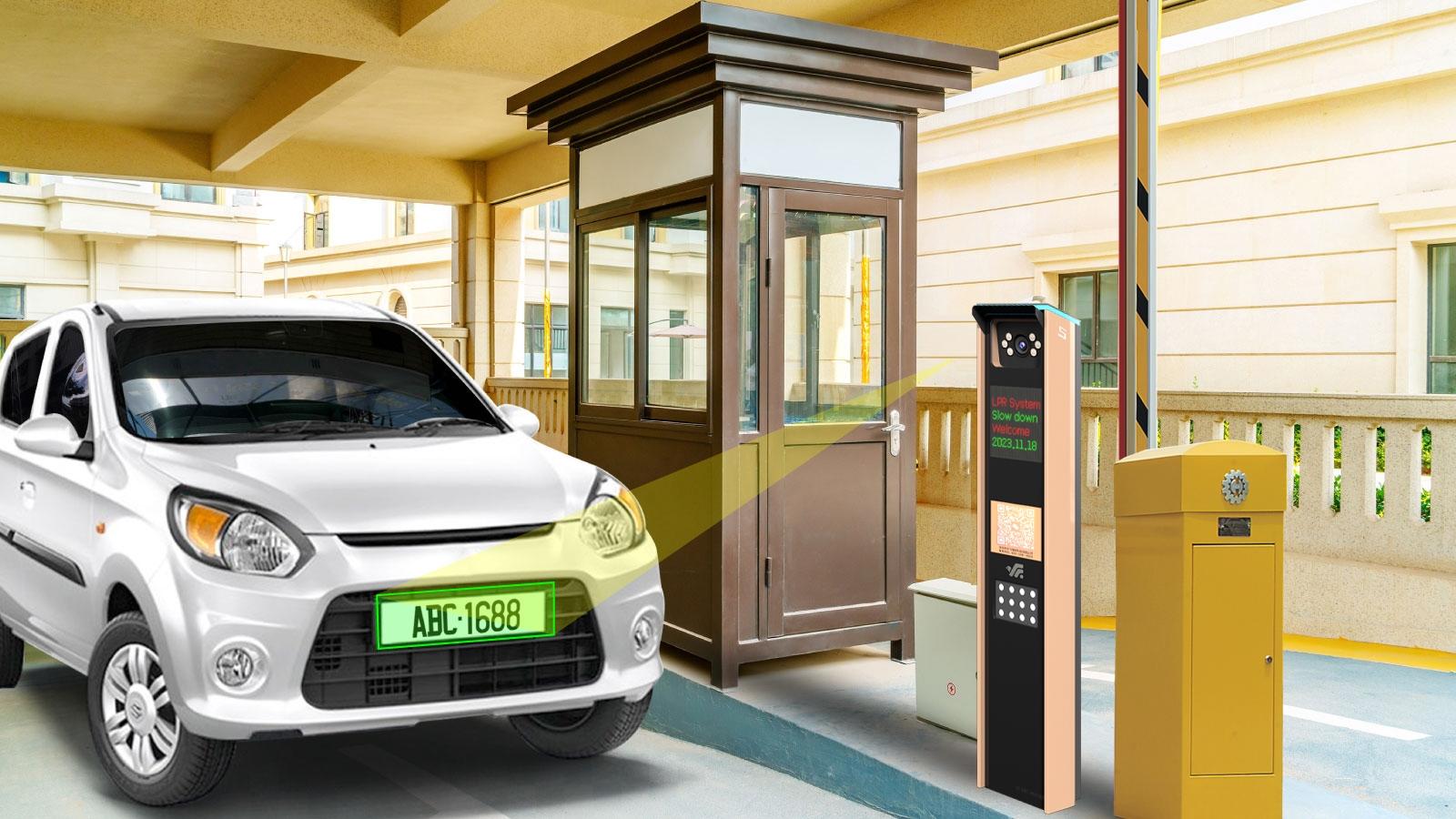
| Vehicle control | Guard checks car decal, writes plate | LPR camera with resident allowlist and visitor plate pre-registration |
| Reporting to council | Monthly typed summary | Dashboard and exportable reports by day, block and visitor type |
| PDPA compliance | Depends on guard discipline | Minimal fields, role-based access, automatic deletion |
| Incident investigation | Search through paper and CCTV manually | Search by unit, plate or time, linked to CCTV footage |
| Contract continuity | Knowledge leaves with the guard | Records and rules stay with the condo system |
Notice the last row. Councils worry that changing agencies means losing records. When the VMS belongs to the estate and is supported by an independent integrator, the council can change agencies without losing its data. Agencies sometimes see that as a threat. In practice, it removes a reason for the council to hesitate before awarding you the contract.
Councils have seen plenty of brochures. What persuades them is a clear description of what the guard does at each step. For example: “A pre-registered visitor shows a QR code at the tablet; the gate opens; the guard sees the visitor’s name and unit on screen. An unregistered visitor is asked for name and contact number; the guard sends a request to the resident’s app; the resident approves within the app; the visit is logged.” That paragraph tells the council you understand their estate.
Use the condo’s own numbers where you can get them. If the managing agent tells you the estate handles roughly 300 visitors and 150 deliveries on a weekend day, show how pre-registration and QR entry reduce the time each one spends at the counter. Be careful to present estimates as estimates. Councils remember inflated claims at renewal time.
Explain which fields are collected (name, contact number, unit visited, time in and out, vehicle plate if driving), who can see them, and how long they are kept. Point out that full NRIC numbers are not collected and physical NRICs are not retained, in line with PDPC guidance. Name the condo’s Data Protection Officer as the escalation point. This section often reassures council members more than any hardware specification.
A council wants to know who answers the phone when the barrier stops working at 11pm on a Saturday. A bid that names an integrator, describes the support process and lists the hardware brands looks far stronger than “we will provide a visitor management system”.
Describe the fallback when the internet line drops or a tablet fails: local controller caching for access rules, a manual override procedure, and a short paper fallback form that is digitised afterwards. Councils who have lived through a gate outage will notice an agency that has thought about it.
Bid evaluators often include a council member who works in IT or engineering. They will ask what is being installed. myCondo works with established brands and can supply the specification sheet for your bid appendix. The examples below are common choices for Singapore condos.
Typical hardware in a condo visitor management bid
| Component | Example model | Specs worth quoting in a bid |
|---|---|---|
| Pedestrian gate terminal | Akuvox X915S | 8″ touchscreen; face, QR, PIN, BLE and card; up to 20,000 faces and 100,000 cards; IP66 and IK10; SmartPlus app |
| Vehicle entrance LPR | Dahua ITC413-PW4D | 4MP access ANPR; allowlist and blocklist up to 110,000 each; two relay outputs for barrier control; IP67 |
| Alternative LPR | Hikvision DeepinView iDS-2CD7A26G0/P-IZHS | 2MP ANPR; vehicle type, colour and brand detection; detects vehicles without plates; IP67 |
| Video management | Milestone XProtect | Open platform supporting 16,500+ devices; desktop, web and mobile clients for guards and management |
| Resident and guard software | myCondo mobile and web app | Visitor pre-registration, QR passes, guard console, reports for the managing agent |
Always confirm the final model list with a site survey. Gate layouts, cable routes and lighting conditions vary from estate to estate, and a specification that works at one condo may need changes at another.
One question comes up in almost every tender: is the technology part of the security contract, or does the MCST buy it separately? Each model has trade-offs.
Ownership models for condo visitor management
| Model | How it works | Good for | Watch out for |
|---|---|---|---|
| MCST owns, integrator supports | MCST buys the system; integrator maintains it; any agency operates it | Continuity when agencies change | Upfront budget approval at an AGM or EGM |
| Bundled in security contract | Agency includes the system in its monthly fee | Estates without a capital budget | Data and hardware handover at contract end |
| Subscription from integrator | MCST pays a monthly fee directly to the technology provider | Spreading cost while keeping control | Contract length and exit terms |
Agencies that propose the bundled model should spell out what happens at contract end: who keeps the hardware, how visitor records are exported, and how long the handover takes. Clear exit terms make a council more willing to sign.
Below is a structure many agencies find useful. Adapt it to the estate and keep each section short.
Winning the tender is half the job. Renewal depends on what the council sees over the next one or two years.
Train every guard, including relief. The weakest point in any VMS deployment is the relief guard on a Sunday night who has never used the console. A one-page quick reference card at the guardhouse and a short video walkthrough fix most of this.
Share monthly reports proactively. Send the managing agent a simple summary: visitor counts, delivery volumes, peak times, incidents and how they were resolved. Councils notice agencies that report without being asked.
Watch for workarounds. If guards start opening the barrier manually for every car because the LPR camera is misaligned, the system is not doing its job. Fix the root cause with the integrator rather than letting a manual habit form.
Bring improvements to the council. When you notice a pattern, for example repeated tailgating at one side gate, propose a fix. It shows the council you are managing outcomes, not just filling shifts.
myCondo is a Singapore technology integrator for condominium security. We work with agencies in three ways.
Because myCondo supports the estate directly, the council keeps continuity of its system and records. Agencies get a technology partner that makes their bid stronger without having to build an in-house engineering team.
Sometimes, but it should not be sold that way without a proper assessment. Technology usually lets the same guards handle higher visitor volumes with fewer queues and better records. Any change in deployment should follow a security review that the council approves.
That depends on the commercial model. In the bundled model the agency may own the hardware, but visitor records belong to the MCST and must be handed over or deleted according to the contract and PDPA obligations. Agree this in writing before installation.
State which personal data is collected, why, who can access it, how long it is kept and how it is deleted. Confirm that full NRIC numbers are not collected from ordinary visitors and that physical NRICs are not retained. Name the condo’s DPO as the contact for data requests.
It depends on the number of gates, cabling and hardware availability. A site survey gives a realistic timeline. Plan the go-live so guard training is complete before residents start using the app.
Often yes. Platforms such as Milestone XProtect are designed to work with a wide range of cameras, and myCondo can assess whether existing equipment can be integrated or should be replaced.
If your agency is preparing a bid for a condominium or mixed development, we can help you put together an accurate technology section and arrange a site survey.
WhatsApp or call: +65 8812 3888
Email: [email protected]
Visit: 8 Ubi Road 2, #07-13 Zervex, Singapore 408538
YOU MIGHT ALSO LIKE
Are short-term rentals allowed in Singapore condos? No, not without approval. The Urban Redevelopment Authority (URA) sets a minimum stay of three consecutive months for private residential properties, including condominiums. Renting a unit out for days or weeks...

What should an MCST check before buying a condo security system in Singapore? Make sure the system solves your estate's actual problems; that visitor management, access control, licence plate recognition and CCTV work together; that it can reuse your existing...
What should you do if you lose your condo access card? Report it to the managing agent or guardhouse immediately so the card can be deactivated, then request a replacement following your estate's process, which usually involves a form and a replacement fee. Until...
NEVER MISS OUR ARTICLES
Get our stories delivered from us to you.