Short-Term Rental Guests in Condos: Security Risks and House Rules for MCSTs
9
October
2026
MERCHANT
Promote your best aircon services on our platform where residents can avail through myCondo.
RESIDENT
Experience better condominium living and facilitate transactions for all your condo-related needs, including buying and selling products and services.
CONDO MANAGEMENT
Condo Managers get intuitive online-based system with exciting new features in administering units.

SHARE
Are short-term rentals allowed in Singapore condos? No, not without approval. The Urban Redevelopment Authority (URA) sets a minimum stay of three consecutive months for private residential properties, including condominiums. Renting a unit out for days or weeks through a holiday-rental platform breaks that rule. For MCSTs and managing agents, the bigger daily problem is security: a stream of strangers with access cards and no link to the estate.
This article explains why unauthorised short-term rentals are a security risk, how to spot them early, what house rules councils commonly adopt, and how a visitor management system (VMS) helps guards control access without making life harder for genuine tenants and their guests.
This article is general information, not legal advice. MCSTs should check current URA rules and take legal advice before adopting or enforcing by-laws.
URA’s position is that private homes are for residential use and stays must be at least three consecutive months. Owners who rent out units for shorter periods without approval can face enforcement action under the Planning Act. Separately, an MCST can make by-laws under the Building Maintenance and Strata Management Act to manage the use of common property, including access to facilities, registration of tenants and the conduct of occupiers.
In practice that means two layers:
MCSTs cannot fine a subsidiary proprietor for breaking URA rules, but they can control access to common property fairly and consistently, and they can report suspected breaches to URA.
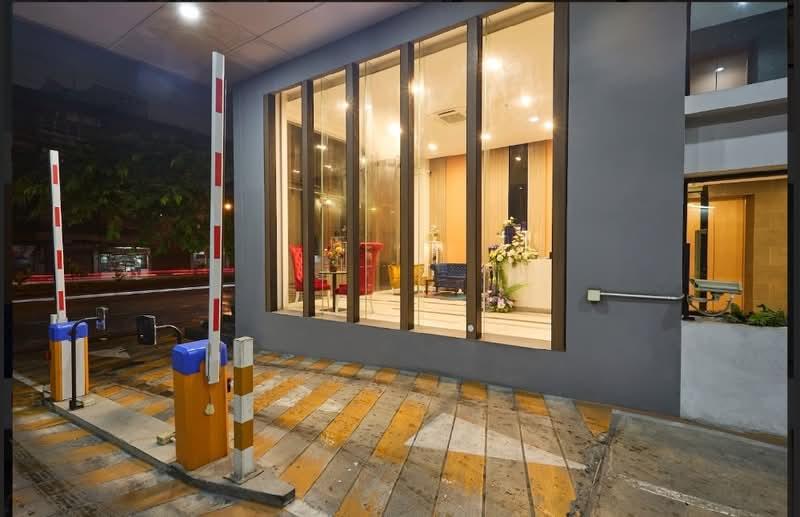
Long-term tenants register with management, receive access cards, learn the house rules and become known to guards. Short-stay guests do none of that. The risks build up quickly.
Security risks of unauthorised short-term stays
| Risk | What happens | Who is affected |
|---|---|---|
| Uncontrolled access cards | Owner hands the same card to guest after guest; copies may be made | All residents |
| Unknown occupants | Guards cannot tell a guest from an intruder | Guards, residents on the same floor |
| Facility overuse and damage | Pools, gyms and BBQ pits used by large groups | MCST budget, residents |
| Noise and parties | Guests have no stake in neighbour relations | Neighbouring units |
| Key boxes and code locks | Lockboxes on railings, door codes shared online | The unit, adjacent units |
| Poor incident records | After a theft or damage, nobody knows who was staying | MCST, police investigation |
None of these signs proves a breach on its own. Together, they justify a conversation with the owner and, if needed, a report to URA.
A digital VMS makes several of these patterns visible without relying on a guard’s memory. When every visitor is logged against a unit with a timestamp, the managing agent can run a simple report and see which units have unusually high, rotating visitor traffic.
The best rules apply equally to everyone, are easy for guards to enforce, and do not punish genuine tenants. Councils often consider the following. Each must be adopted through the proper by-law process and checked by a lawyer.
Common house rules and how technology supports them
| House rule | Purpose | How a VMS helps |
|---|---|---|
| Tenants must be registered with management, with tenancy dates | Know who lives in each unit | Tenant profiles with start and end dates in the app |
| Access credentials issued only to registered occupants | Stop card passing | Mobile or face credentials tied to a person, expiring with the tenancy |
| Visitors must be registered by an occupant | Every guest has a host | Resident pre-registration with QR passes |
| Facility bookings by registered occupants only | Protect shared facilities | Booking in the app linked to verified residents |
| No lockboxes on common property | Remove uncontrolled key sharing | Guard patrol checklist and incident logging |
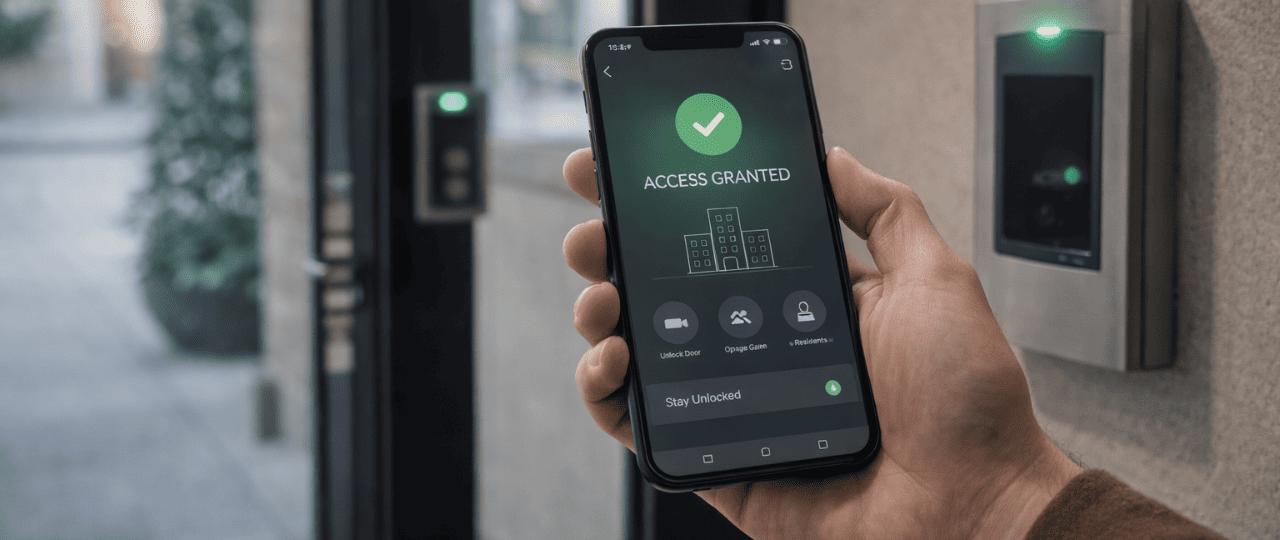
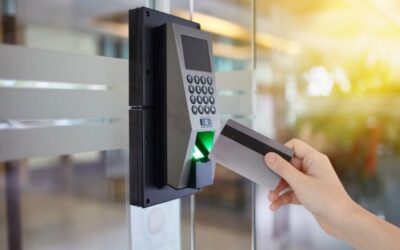
Physical access cards are the root of the problem. A card can be handed from one guest to the next, left in a lockbox or copied. Personal credentials are harder to share.
For vehicles, licence plate recognition at the car park barrier, using cameras such as the Dahua ITC413-PW4D or Hikvision DeepinView ANPR, lets residents’ cars in automatically and logs visitor plates against the unit they are visiting. A unit that pre-registers a different car every few days stands out in the report.
myCondo provides the technology, mobile and web app, integration and after-sales support for Singapore condominiums. Our visitor management system ties every visitor to a host unit, issues time-limited QR passes, and gives managing agents reports that reveal unusual traffic patterns. We integrate hardware from partners including Akuvox, Dahua Technology, Hikvision and Milestone, so pedestrian gates, car park barriers and CCTV work as one system.
URA’s minimum stay for private residential properties is three consecutive months. Shorter stays need URA approval. Check URA’s website for the current rules.
Enforcement of the minimum stay rule belongs to URA. An MCST can enforce its own by-laws through the processes allowed by law, and it can report suspected breaches to URA. Take legal advice before acting.
Guards should apply the estate’s visitor process to everyone. If a visitor is not registered by an occupant, the guard follows the normal procedure for unregistered visitors and escalates to management where needed.
Usually the opposite. Tenants open gates with their phone, register guests in seconds and do not need to collect or return physical cards. Credentials simply expire when the tenancy ends.
No. Face recognition should be optional, with consent and an alternative such as a mobile credential or card. Many estates use mobile and QR access as the default.
If your estate is dealing with rotating short-stay guests or card sharing, we can review your access setup and suggest practical changes.
WhatsApp or call: +65 8812 3888
Email: [email protected]
Visit: 8 Ubi Road 2, #07-13 Zervex, Singapore 408538
YOU MIGHT ALSO LIKE
How can a security agency win more condo tenders in Singapore? Councils are no longer choosing on headcount and hourly rate alone. MCSTs want proof that guards will be supported by technology: digital visitor registration, licence plate recognition, audit trails they...
What should an MCST check before buying a condo security system in Singapore? Make sure the system solves your estate's actual problems; that visitor management, access control, licence plate recognition and CCTV work together; that it can reuse your existing...
What should you do if you lose your condo access card? Report it to the managing agent or guardhouse immediately so the card can be deactivated, then request a replacement following your estate's process, which usually involves a form and a replacement fee. Until...
NEVER MISS OUR ARTICLES
Get our stories delivered from us to you.