Face Recognition at Condo Entrances in Singapore: PDPA, Consent and Accuracy
11
October
2026
MERCHANT
Promote your best aircon services on our platform where residents can avail through myCondo.
RESIDENT
Experience better condominium living and facilitate transactions for all your condo-related needs, including buying and selling products and services.
CONDO MANAGEMENT
Condo Managers get intuitive online-based system with exciting new features in administering units.

SHARE
Can Singapore condos use face recognition at the gate? Yes, provided the MCST handles it responsibly. Face data is personal data under the Personal Data Protection Act (PDPA), and biometric data deserves extra care because a person cannot change their face the way they change a password. The practical approach most estates take is simple: make face access optional, get clear consent, offer a card or mobile alternative, protect the templates and delete them when a resident leaves.
This guide explains how face recognition works at a condo gate, the PDPA points councils should address, how accurate modern terminals are, and how to roll it out without upsetting residents.
Terminals such as the Akuvox X915S are designed for this. It has an 8-inch 1280×800 touchscreen, a 5MP starlight camera for recognition in low light plus a 2MP camera for anti-spoofing, and supports up to 20,000 faces. It also accepts QR, PIN, Bluetooth and RFID cards (125kHz and 13.56MHz including MIFARE DESFire), so residents who do not want face access still have options. Its IP66 and IK10 rated housing suits outdoor gates in Singapore’s weather.
Face access compared with other credentials
| Credential | Convenience | Can it be shared or lost? | Privacy sensitivity |
|---|---|---|---|
| Access card | Must carry it | Yes, easily | Low |
| Mobile credential or QR | Phone needed | Harder; tied to account | Low to medium |
| PIN | Nothing to carry | Easily shared | Low |
| Face | Hands-free, nothing to carry | Cannot be lent or lost | High: biometric data |
Face access is popular with residents carrying groceries or children, joggers without pockets, and elderly residents who forget cards. It also stops card passing, which helps with unauthorised short-term rentals. The trade-off is privacy sensitivity, which the estate must manage properly.
The PDPA applies to MCSTs as organisations that collect, use and disclose personal data. For face recognition, councils should address the following. This is general information, not legal advice; check the PDPC’s latest guidance and take advice where needed.
PDPA checklist for condo face recognition
| Obligation | What it means at the gate |
|---|---|
| Consent | Residents opt in with a clear explanation. No one is forced to enrol. |
| Purpose limitation | Face data is used only for access control, not for tracking residents’ movements for other purposes. |
| Notification | A written notice explains what is collected, why, where it is stored and for how long. |
| Protection | Templates are encrypted, admin accounts protected, and access to the system is restricted and logged. |
| Retention limitation | Templates are deleted when a resident moves out or withdraws consent. The PDPA sets no fixed period, so the estate defines one. |
| Access and correction | Residents can ask what data is held and request withdrawal through the DPO. |
| Accountability | The MCST appoints a Data Protection Officer and keeps a written policy. |
Penalties for serious breaches can be significant. Since October 2022, the maximum financial penalty is 10% of an organisation’s annual turnover in Singapore if that turnover exceeds S$10 million, or S$1 million otherwise. More important for most estates is the loss of residents’ trust after a data incident.
Face enrolment is normally for residents and long-term occupants. For visitors, QR passes are usually the better choice. They are quick, expire automatically and do not involve biometric data. If an estate wants face access for regular visitors such as caregivers, it should get explicit consent from the visitor, set an expiry date and delete the template when the arrangement ends.
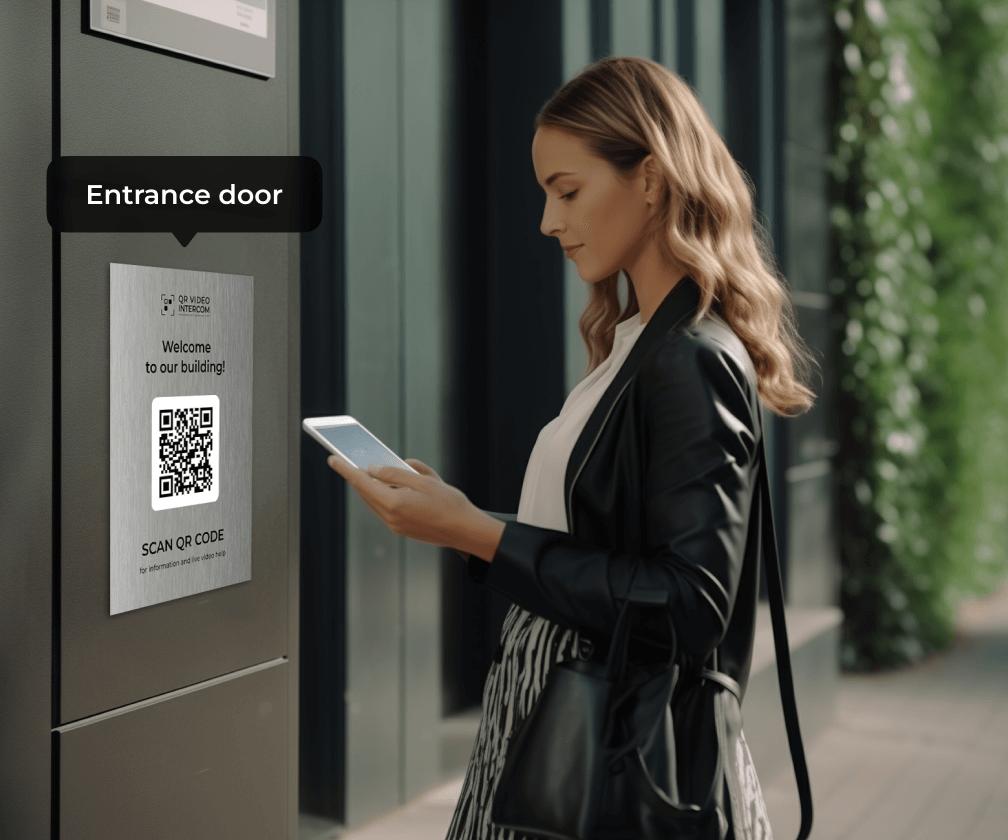
Modern terminals perform well in controlled settings like a condo gate, where people walk up to the device and look at it. Accuracy in practice depends on several factors.
Always keep a fallback. If face recognition fails, the resident should be able to use the app, a card or a PIN without waiting for a guard.
myCondo installs and integrates face recognition terminals from Akuvox together with car park LPR from Dahua Technology and Hikvision and video management from Milestone. The myCondo mobile and web app handles opt-in enrolment, consent records, visitor QR passes and template deletion when residents leave. Our Singapore team supports the system after installation and helps tune it for your estate’s gates.
The PDPA does not ban it. Organisations must have consent or another basis under the Act, use the data only for the stated purpose, protect it and delete it when no longer needed.
Yes. Face access should be optional, with card, mobile or QR alternatives available.
Systems usually store a template derived from the photo, and may store event snapshots. The estate’s notice should explain exactly what is kept and for how long.
Many terminals can recognise faces with masks, though accuracy may be lower. Residents can always use a fallback credential.
It should be deleted. Ask management to confirm deletion as part of the move-out process.
Considering face access for your estate? We can help your council plan a privacy-friendly rollout and run a pilot at one gate.
WhatsApp or call: +65 8812 3888
Email: [email protected]
Visit: 8 Ubi Road 2, #07-13 Zervex, Singapore 408538
YOU MIGHT ALSO LIKE
What does it take to switch a condo to mobile app door access? Less hardware than most councils expect, and more preparation of resident data than most managing agents expect. The readers at gates and lift lobbies must support Bluetooth, NFC or QR, but the bigger job...
When should a condo replace its intercom? When repairs become frequent, spare parts are hard to find, and residents complain that visitors cannot reach them. Many Singapore condos built in the 1990s and 2000s still run analogue or early digital intercoms wired to...
Why integrate visitor management with CCTV? Because most condo investigations start with a question like "who came into Block 3 between 2pm and 4pm on Saturday?" If the visitor log and the CCTV recorder are separate, a guard has to read the log, note times, then scrub...
NEVER MISS OUR ARTICLES
Get our stories delivered from us to you.